Natural vs. synthetic emerald: how to recognize a genuine emerald
Learn to tell a natural emerald from a synthetic or imitation stone: signs, inclusions and why raw Muzo emerald is unique.
One of the questions we get most often is how to tell whether an emerald is real. The answer lies in the details: natural emeralds, and especially uncut ones, keep inclusions and veining that no lab-created stone can imitate exactly.
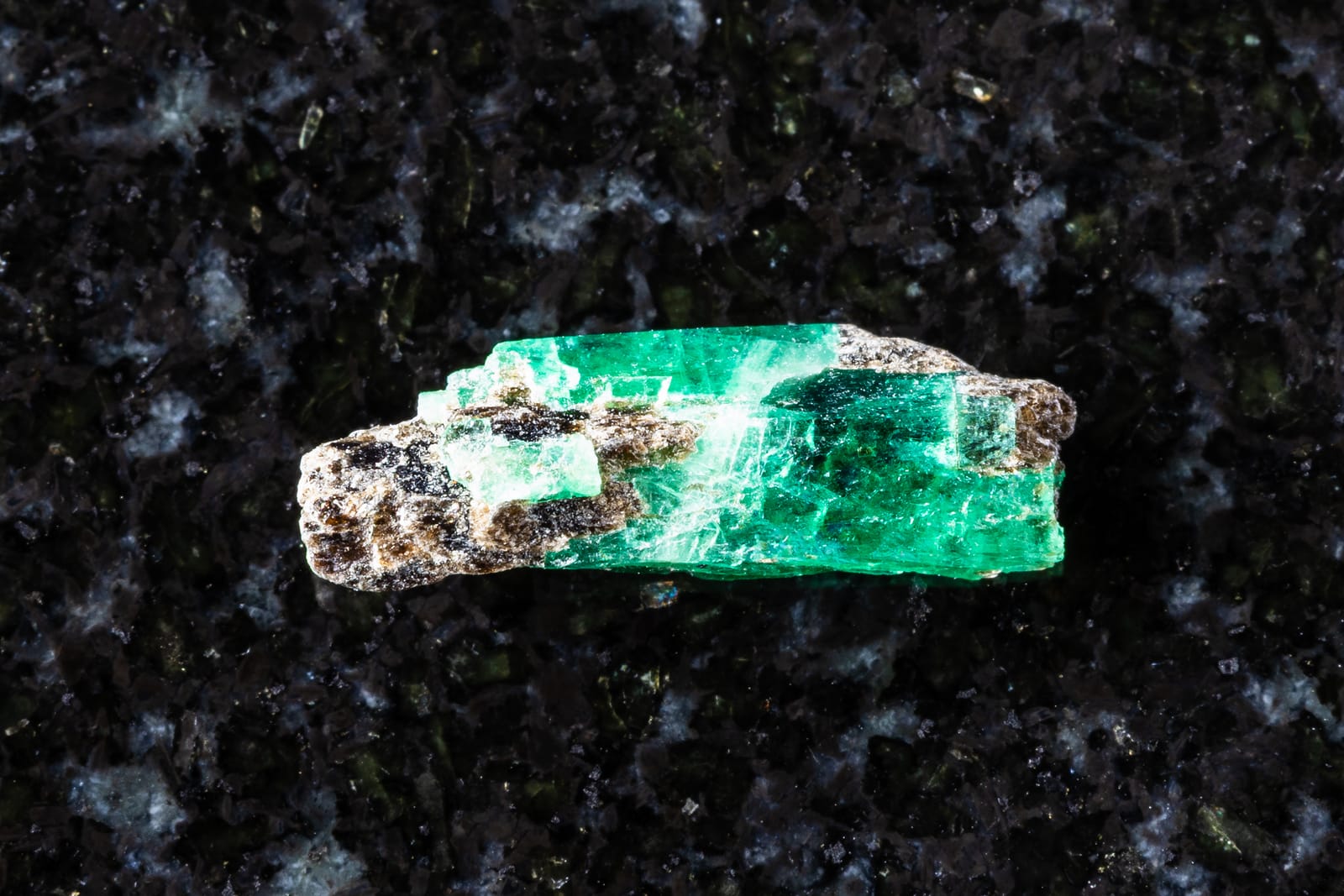
Natural emerald forms over millions of years underground, with impurities, fractures and inner "gardens" that are its mark of authenticity. Synthetic emerald is made in a lab and is often too perfect: uniform color, no inclusions and, under a loupe, no life.
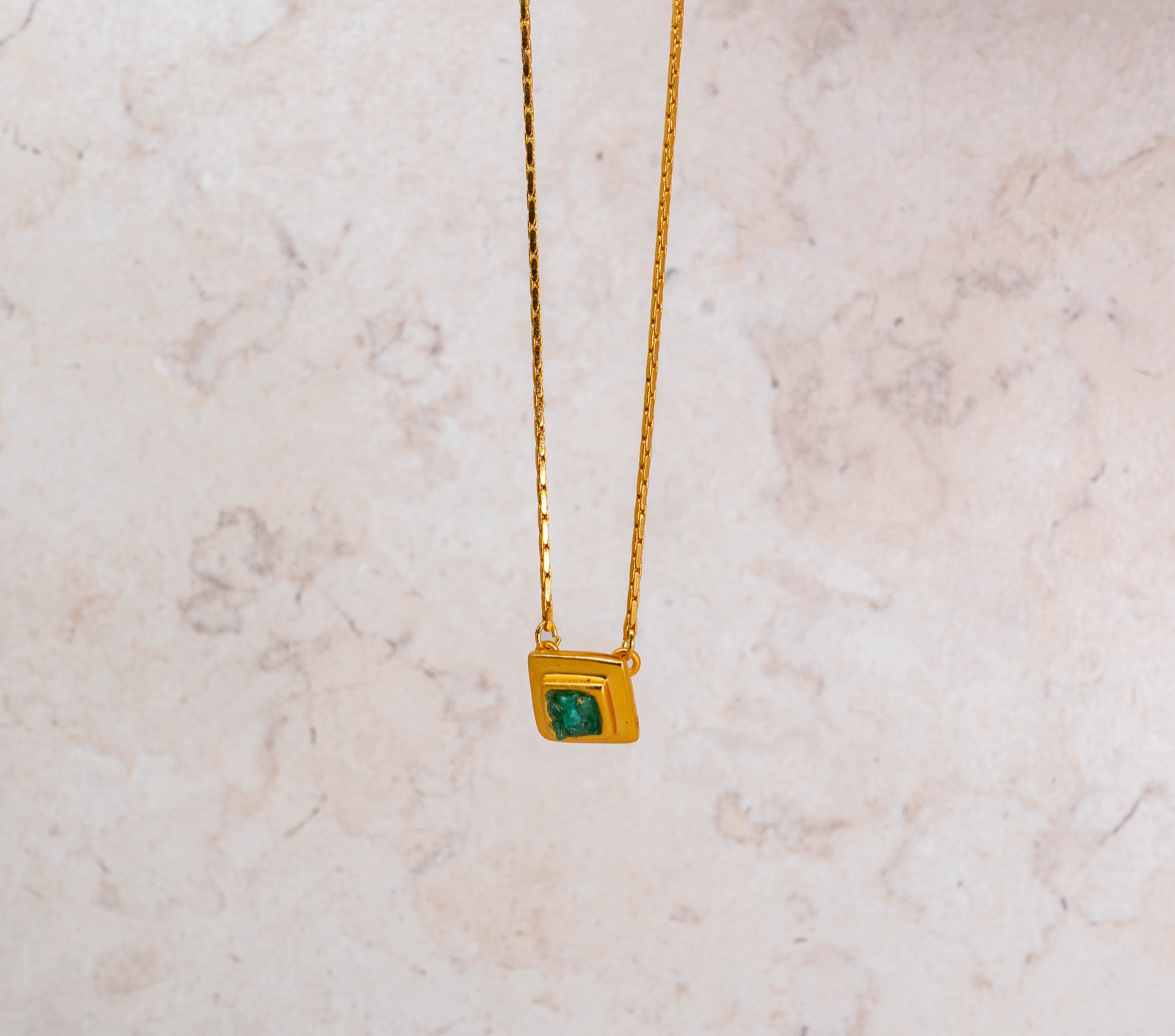
Watch out for imitations: glass, dyed quartz or green spinel can look similar at first glance, but they do not have the hardness, the shine or the weight of an emerald. That is why at Aluna we only work with raw Muzo emerald, hand-selected and free of treatments that hide its origin.
Raw emerald is the most honest proof: it shows itself exactly as it came out of the mine, with its irregular shape and its inclusions. It cannot be faked without being noticed, because its imperfection is precisely what makes it unique.
Beyond its authenticity, Colombian emerald is associated with love, hope and renewal, and it is the stone that represents Colombia to the world. Wearing a Muzo emerald is wearing a real fragment of the territory.
At Aluna every emerald comes with its story and its certificate of authenticity. Explore the collection and choose a piece with natural emerald, handmade in Colombia.