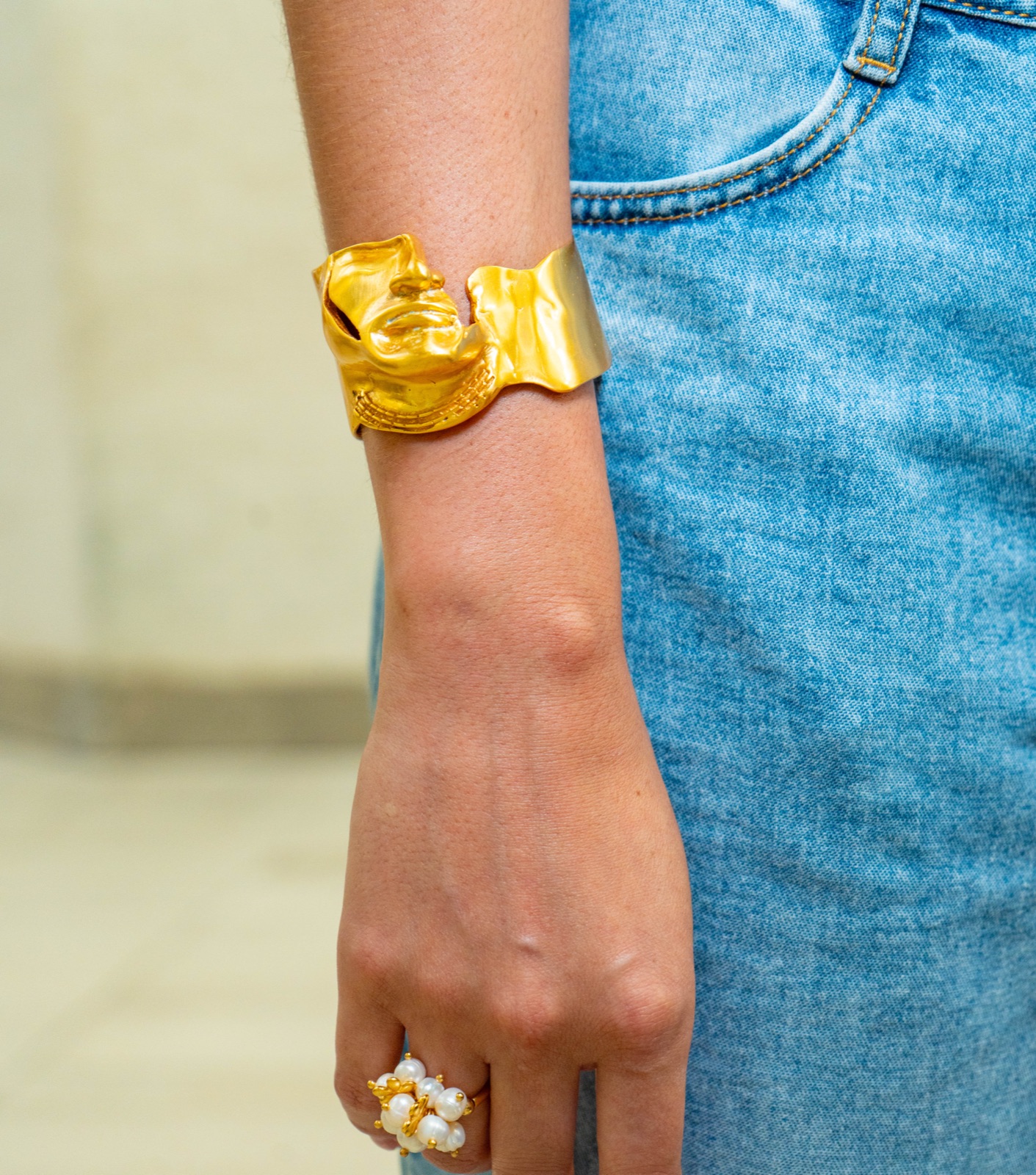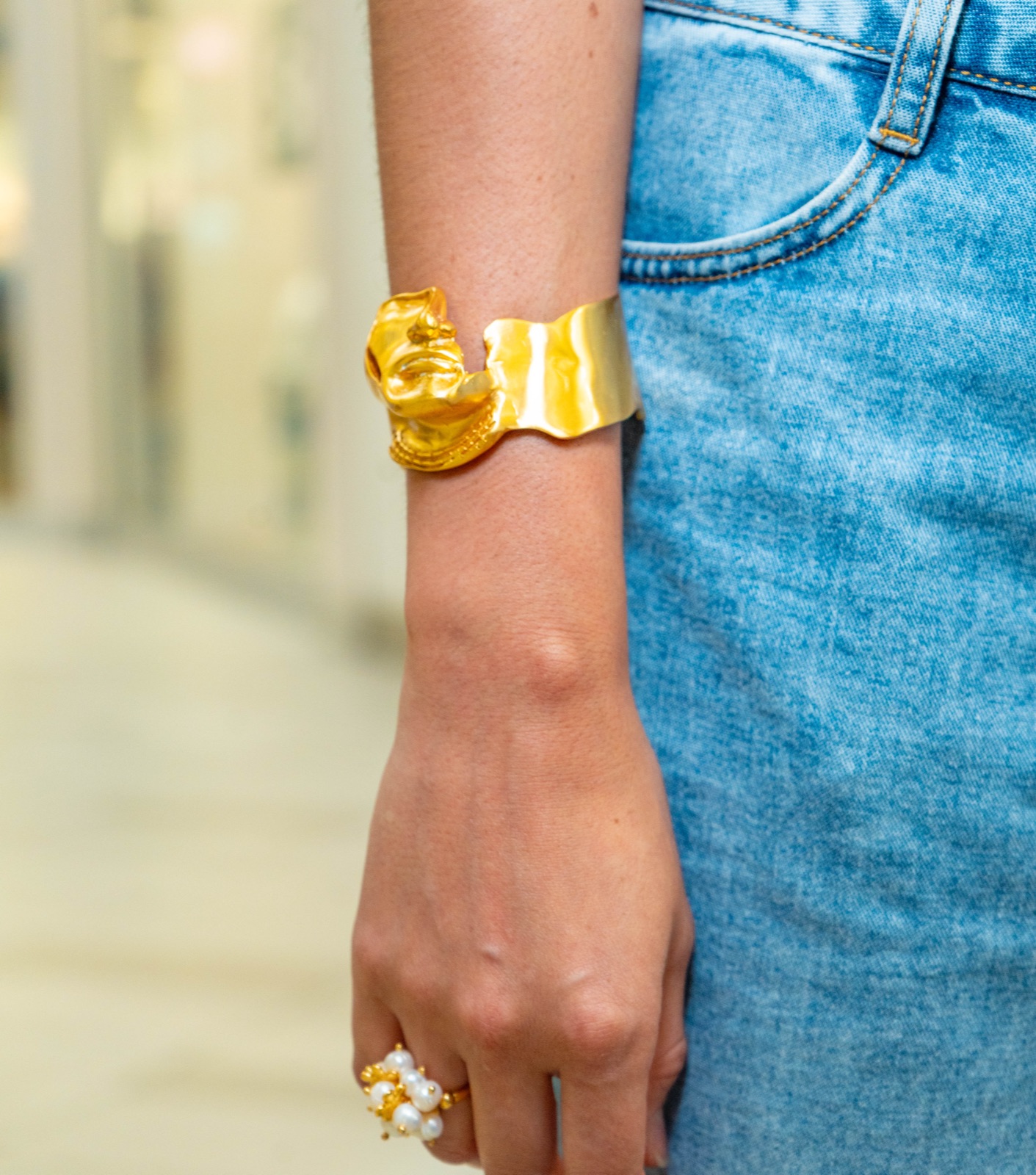
The meaning of pre-Columbian symbols in Aluna jewelry
What the sun, the nose ring, the tunjo, the poporo, the jaguar or the butterfly meant in pre-Columbian Colombia, and in which Aluna pieces you can wear them today.
In the pre-Columbian world, a symbol was not decoration: it was a language. Every figure carved in gold said something about the cosmos, about the gods or about the power of the person who wore it. That is why at Aluna every piece is born from a symbol, and every symbol has its story.
This is the meaning of the ones that live most in our jewelry.
Cosmos
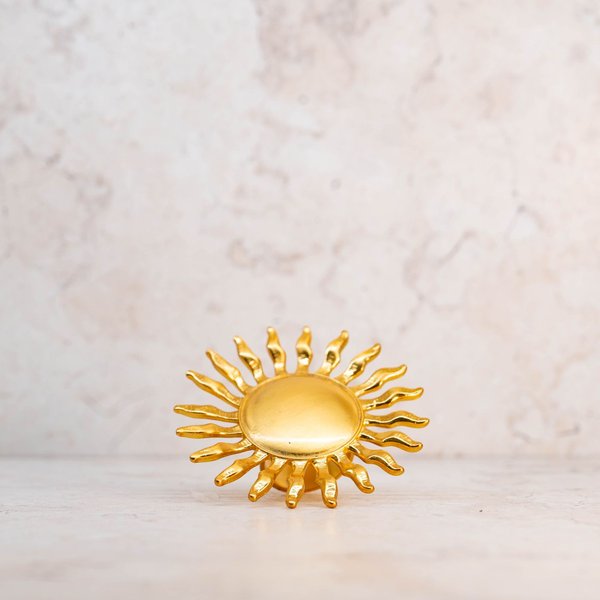
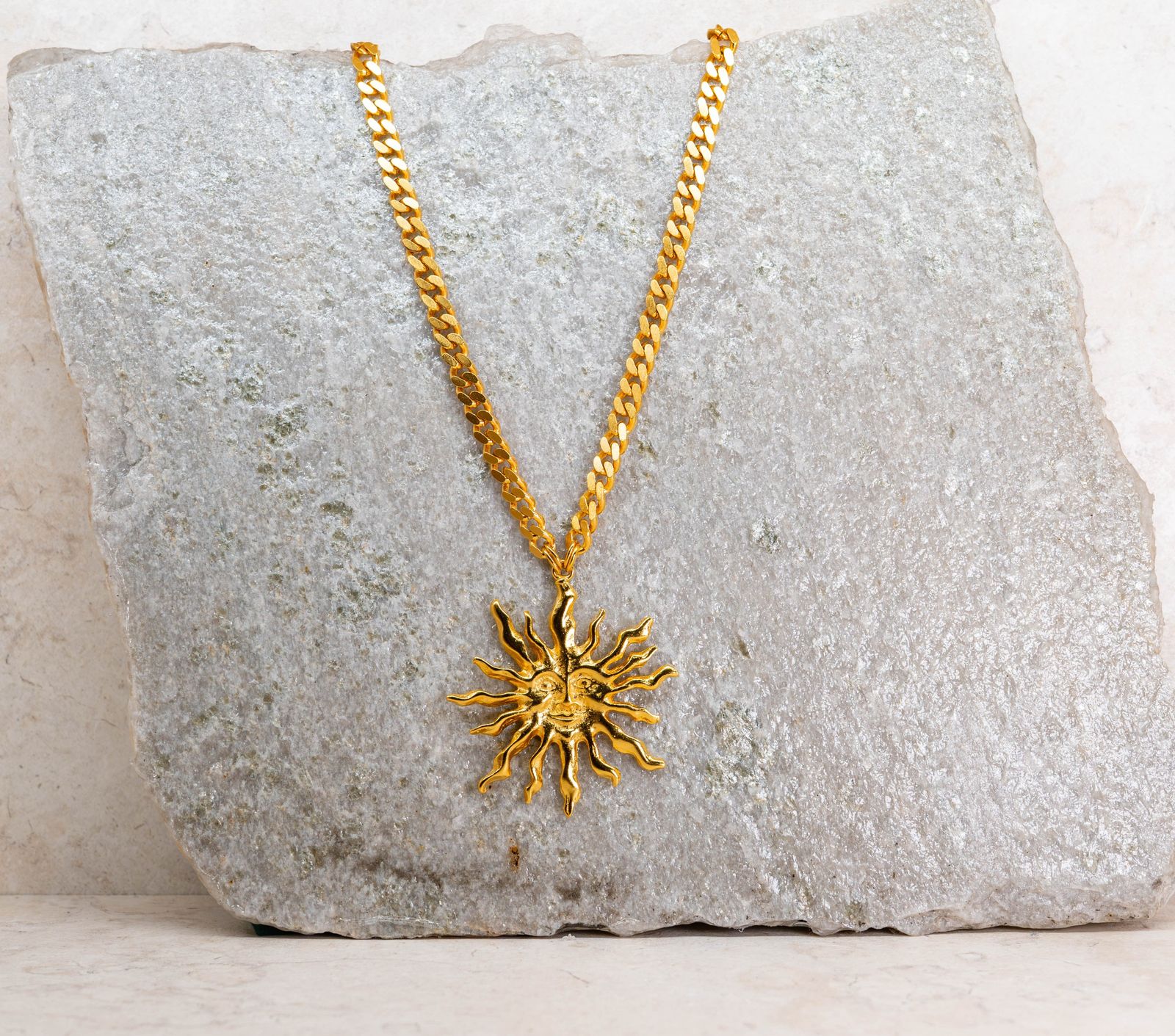
The sun
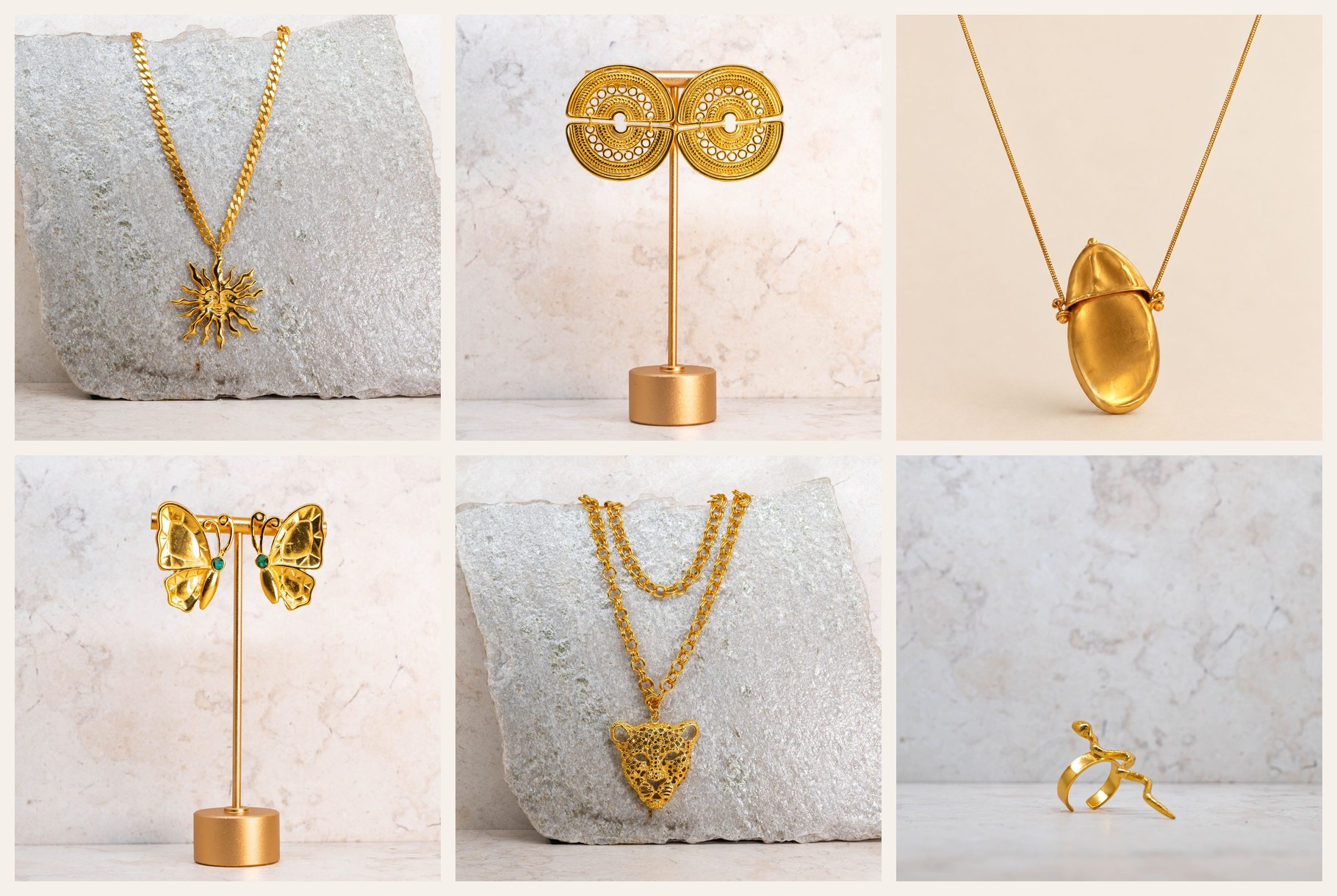
The sun was the energy that ordered life. For the Muisca, gold was no ordinary metal: it was sunlight made matter. To wear a sun is to wear that idea, the force that gives life and returns every day.
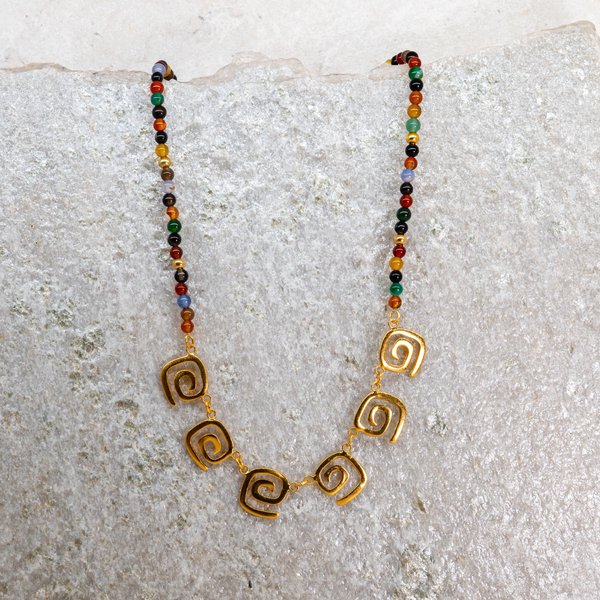
The spiral, the path of life
The spiral, which appears in our pieces as the Path of Life, represents time that turns, the cycle that repeats and transformation. Nothing ends completely: everything returns, changed.
Sacred fauna
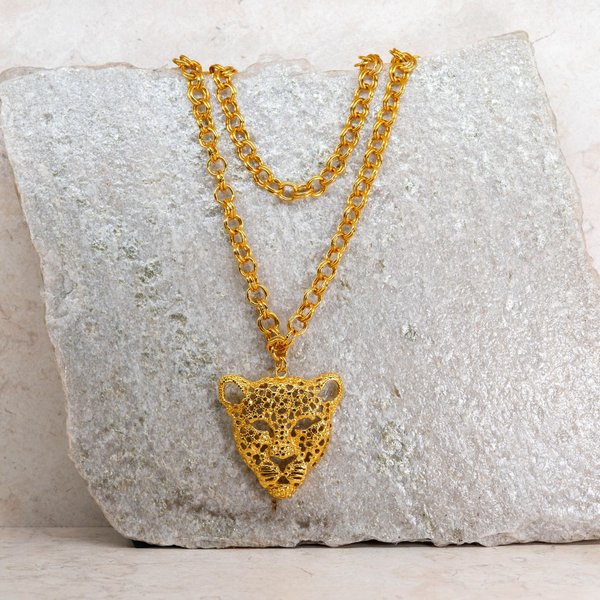
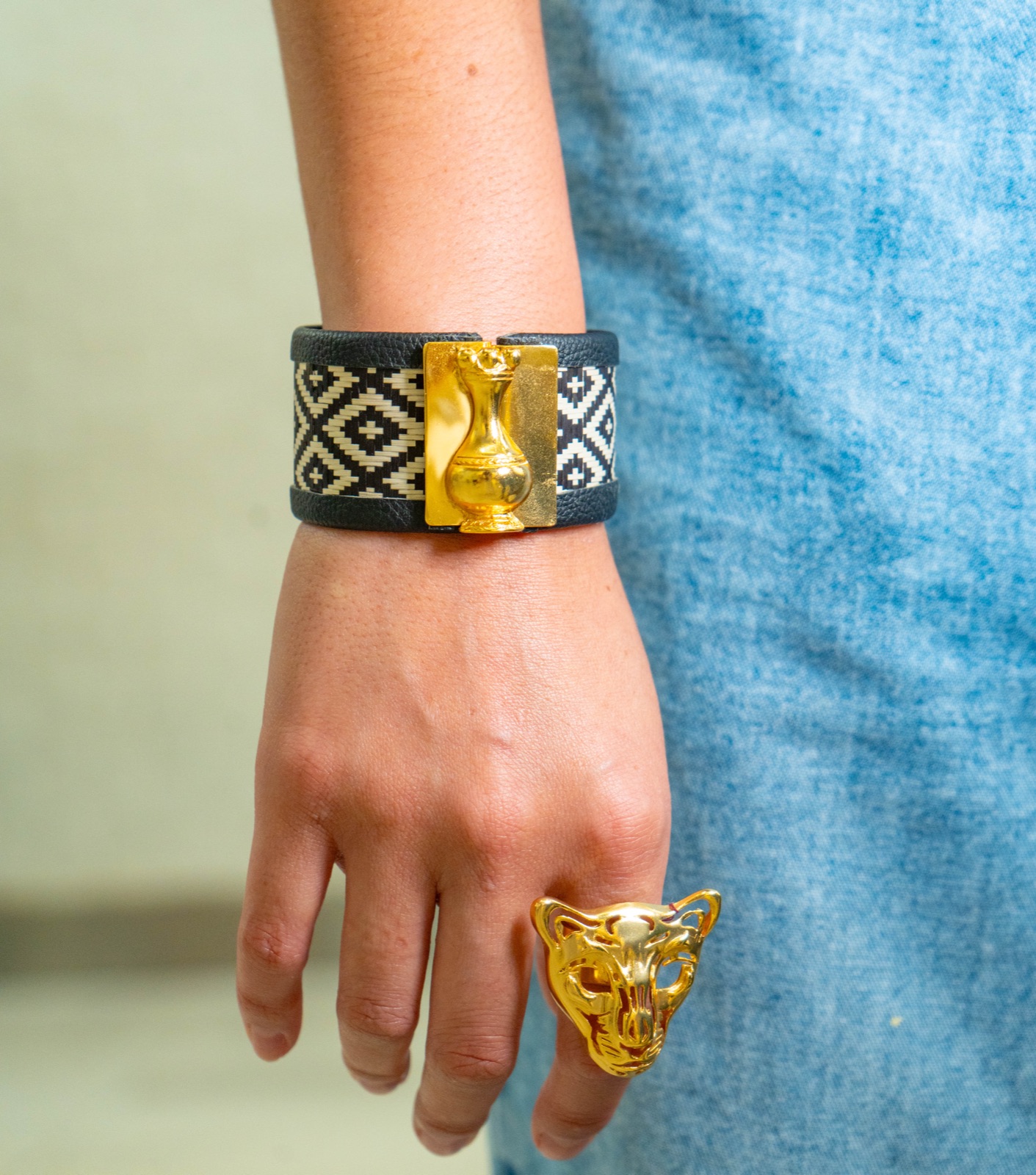
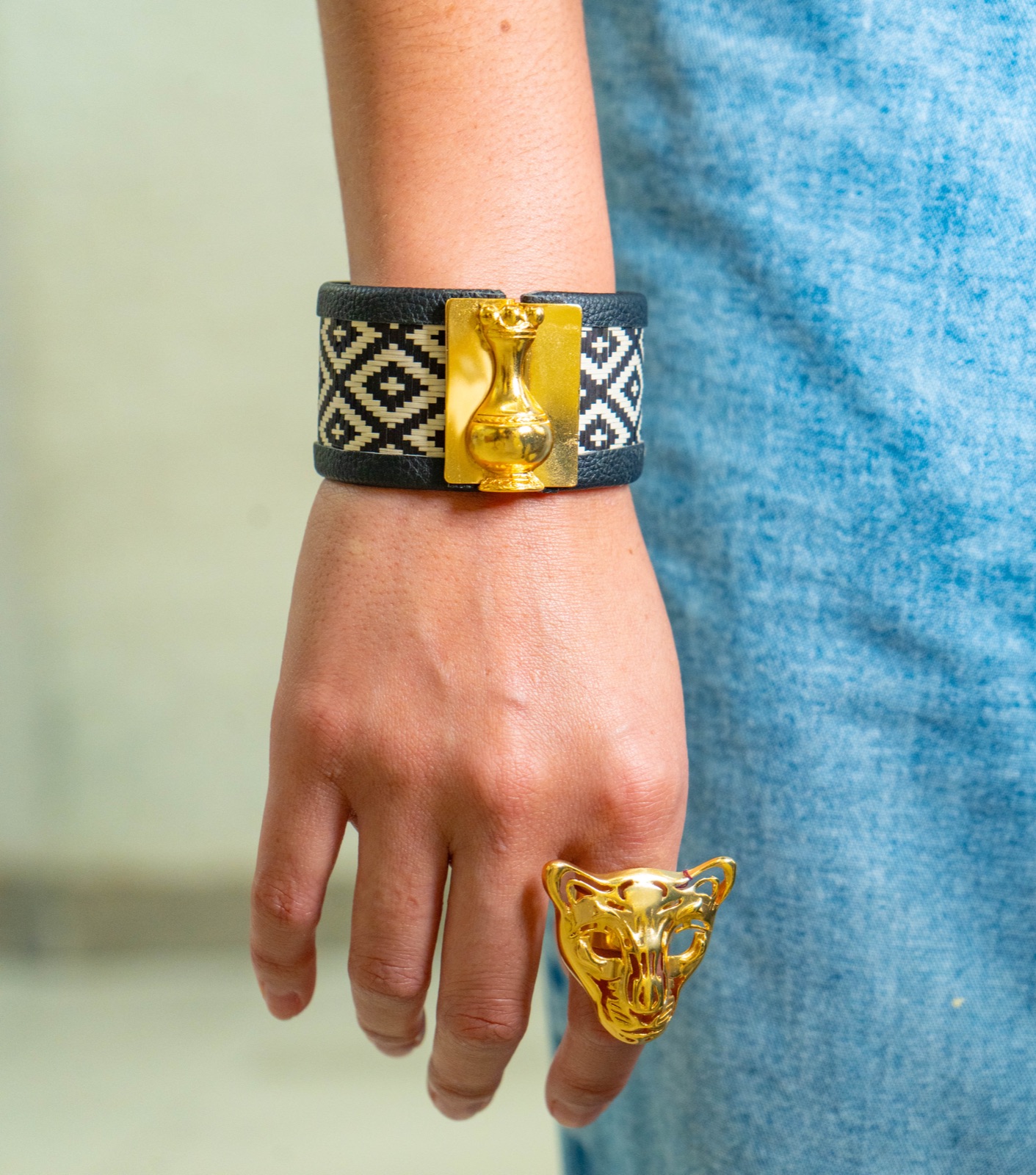
The jaguar
The jaguar, together with the panther and the leopard, was the lord of the night and the jungle, a symbol of power, courage and the spiritual world that only the shaman could enter.
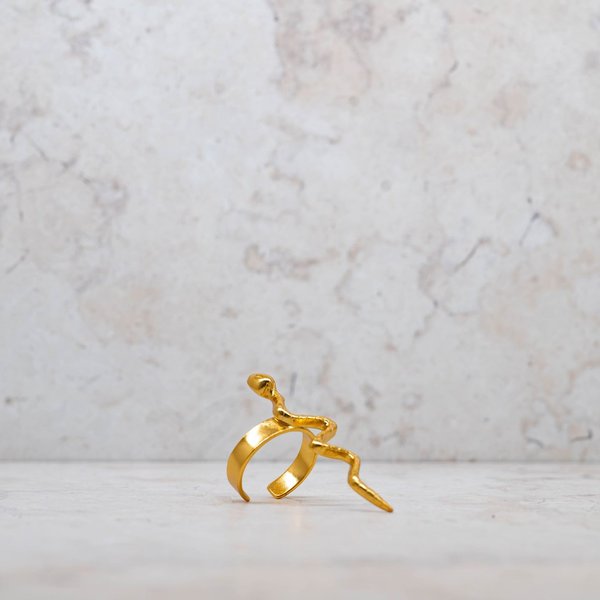
The serpent
The serpent united sky, earth and water. It symbolized wisdom and the course of rivers and, through its ability to shed its skin, renewal as well.
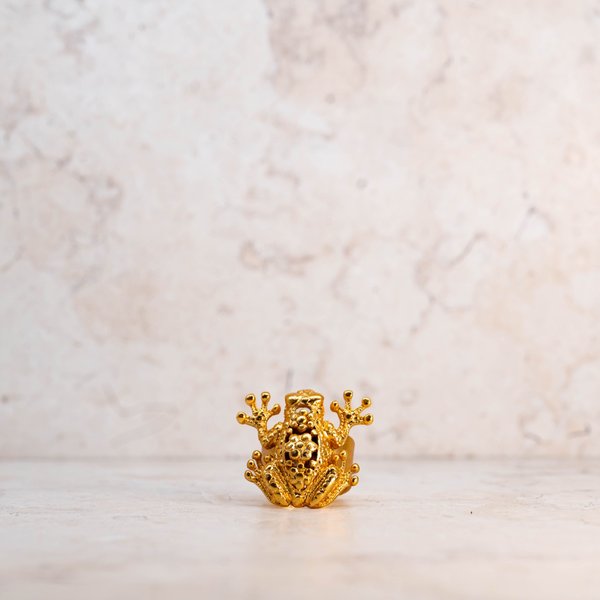
The frog
The frog was the voice of rain and fertility. It announced the water that makes things grow, and so it was linked to abundance and to life reborn.
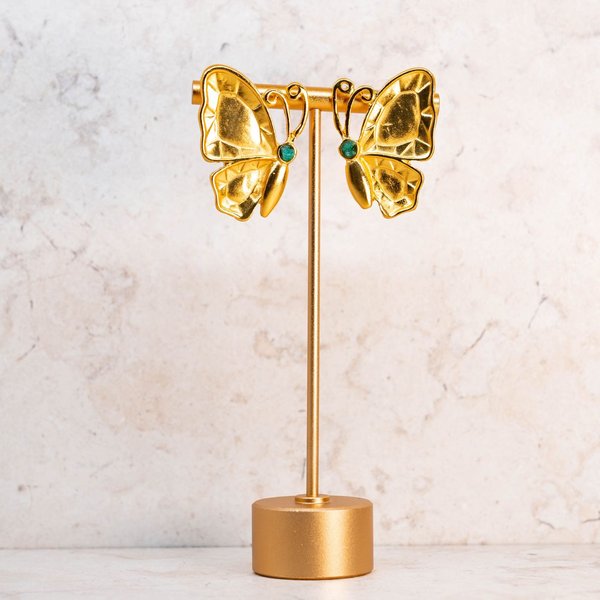
The butterfly
The butterfly represented the soul and transformation, the passage from one state to another. It was a messenger that traveled between the world of the living and that of the ancestors.
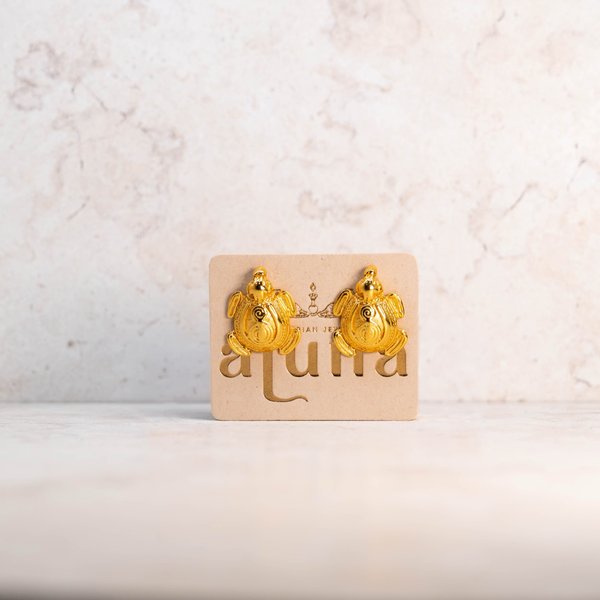
The turtle
The turtle embodied longevity, calm and the origin of the world. In several cosmologies, the earth itself rested on its shell.
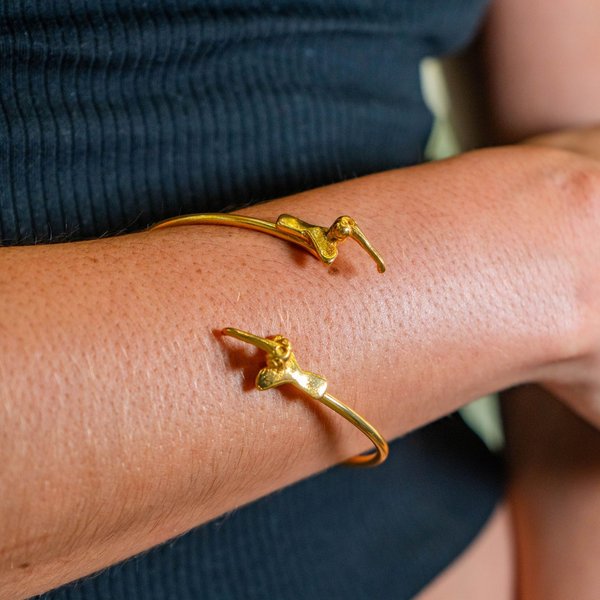
The hummingbird and birds
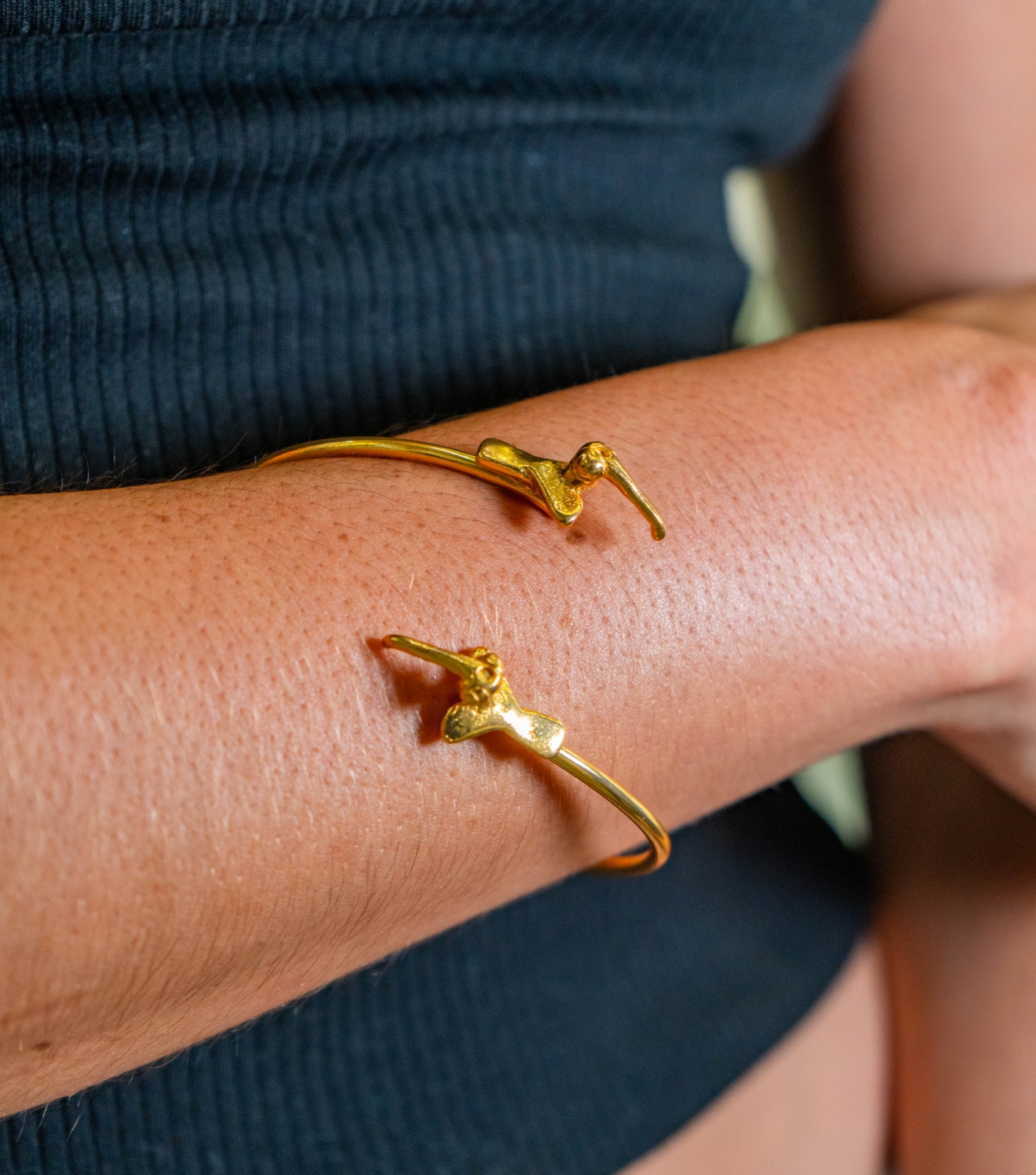
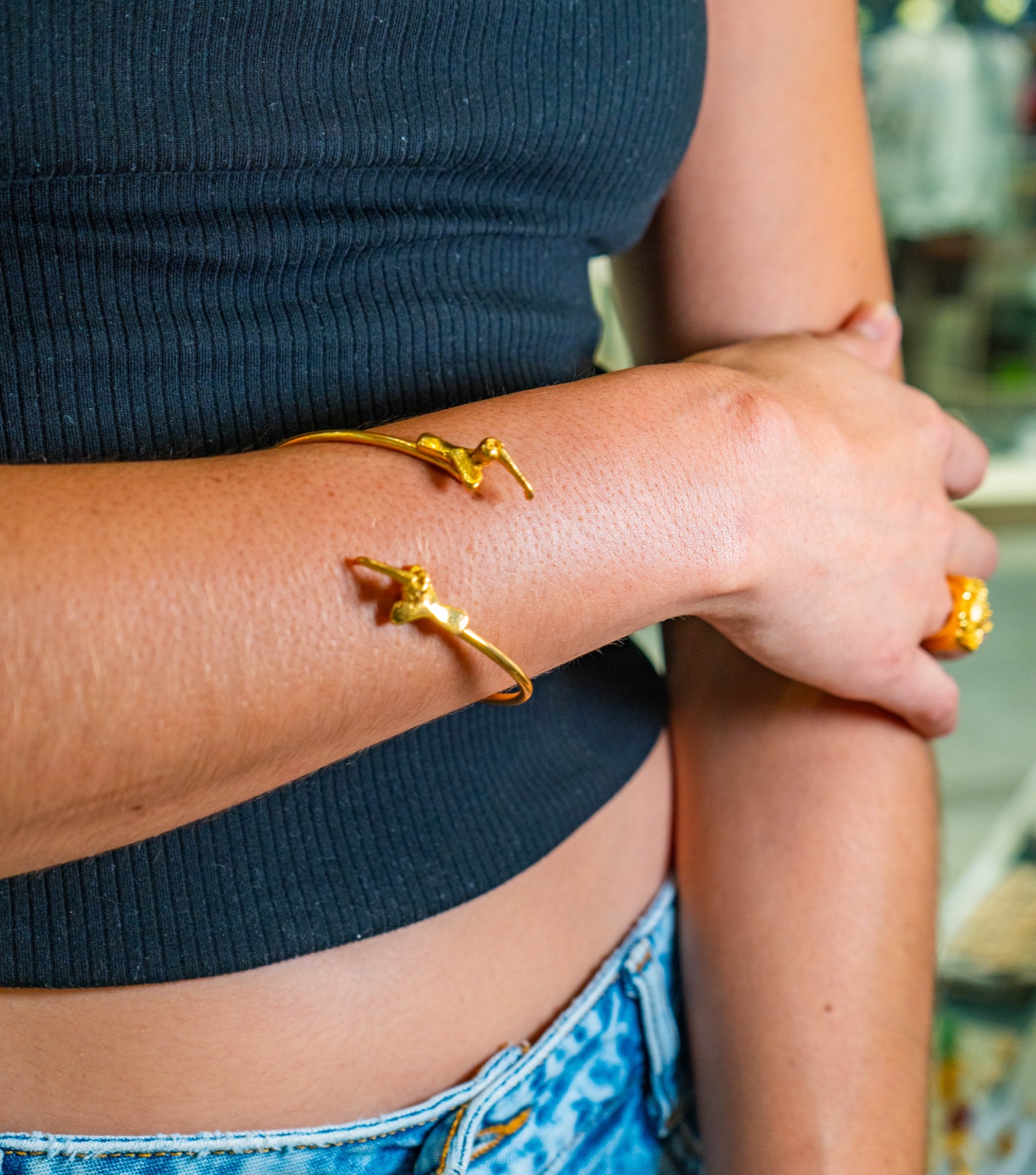
The hummingbird and birds were messengers of the gods, beings that could rise to the sky. They represented freedom and the connection between the human and the divine.
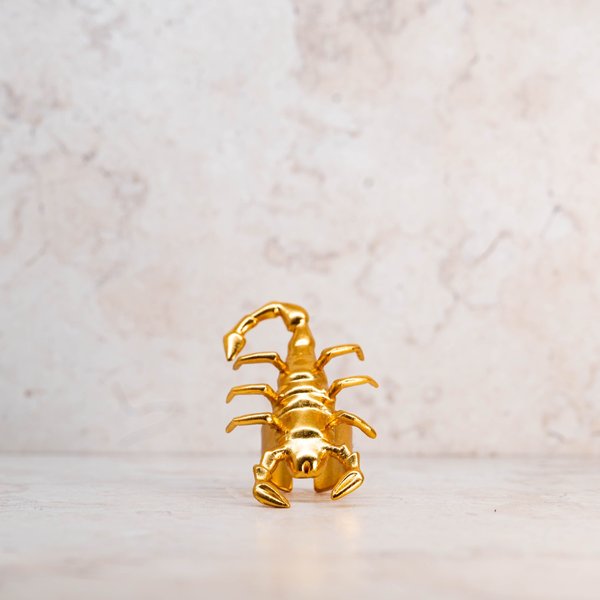
Scorpion, crab and others
The scorpion, the crab, the ladybug, the spider, the dragonfly and the lizard were part of the fauna around everyday life. They were credited with protection, fertility and strength, and were natural amulets.
Ornaments of power
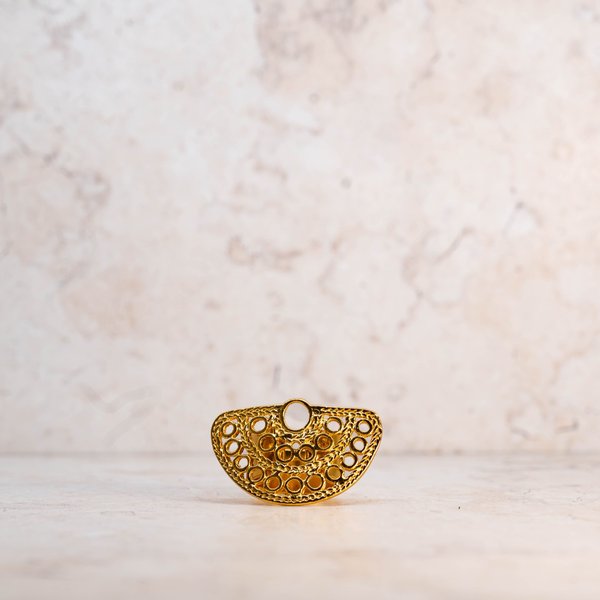
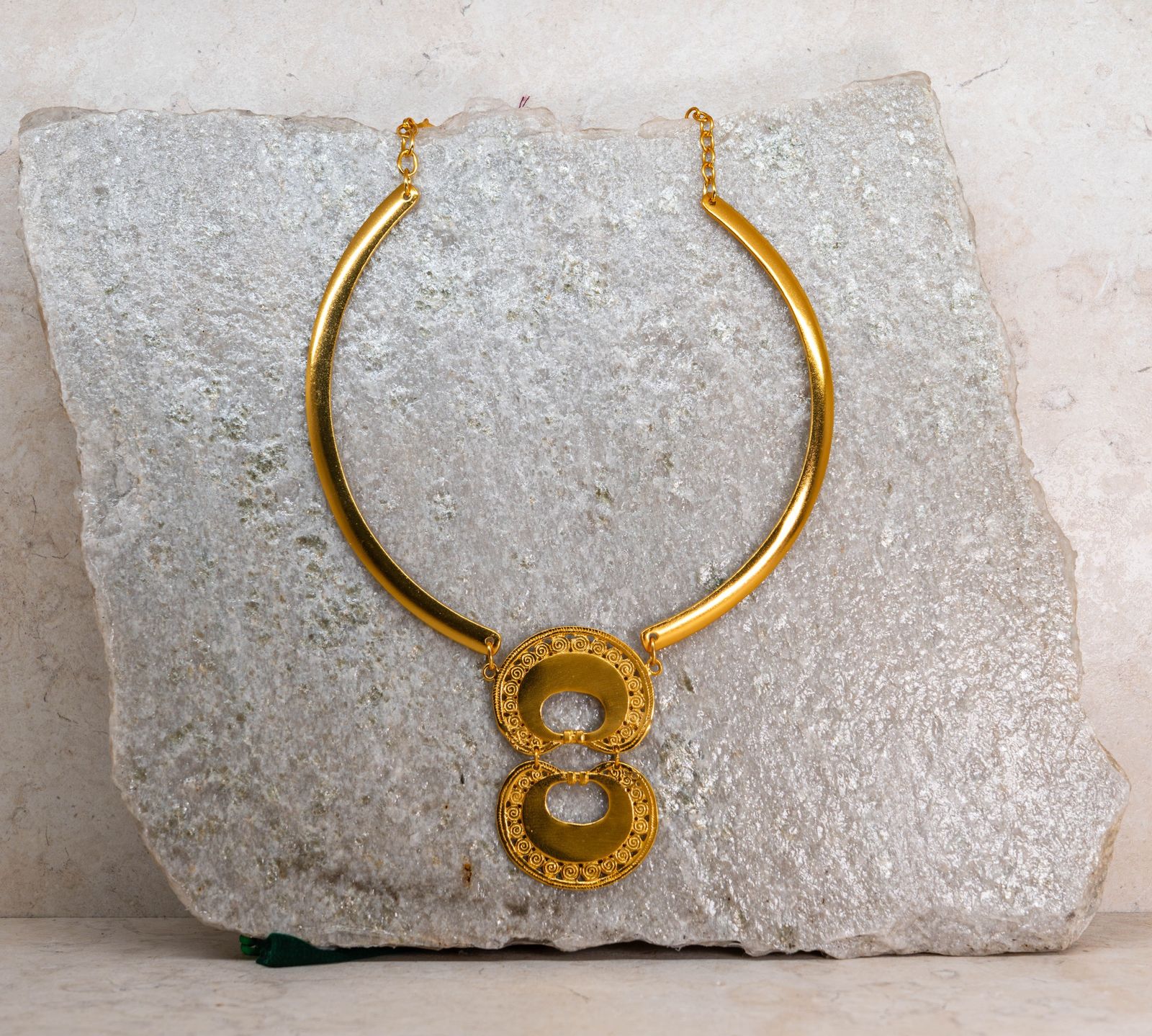
The nose ring
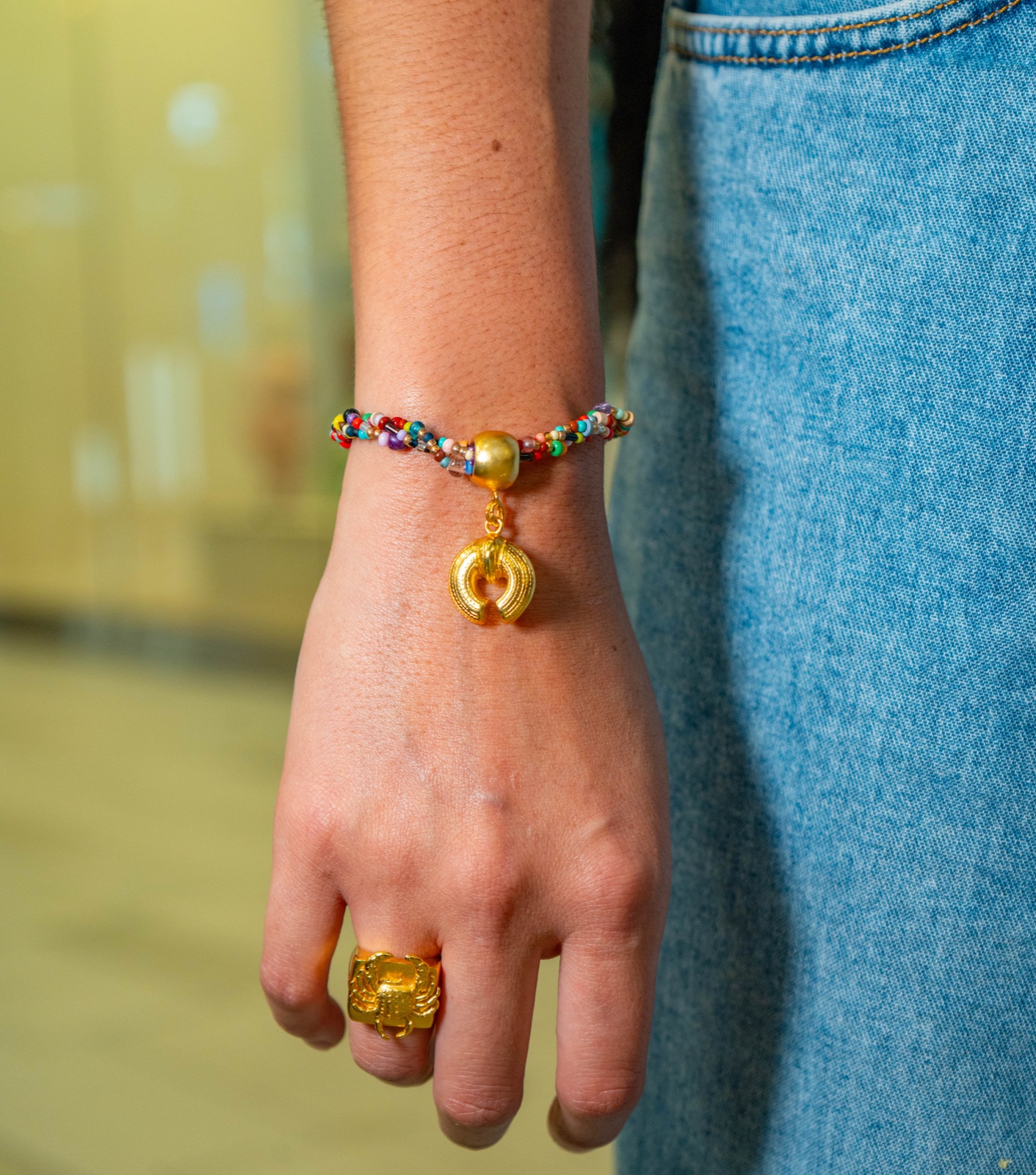
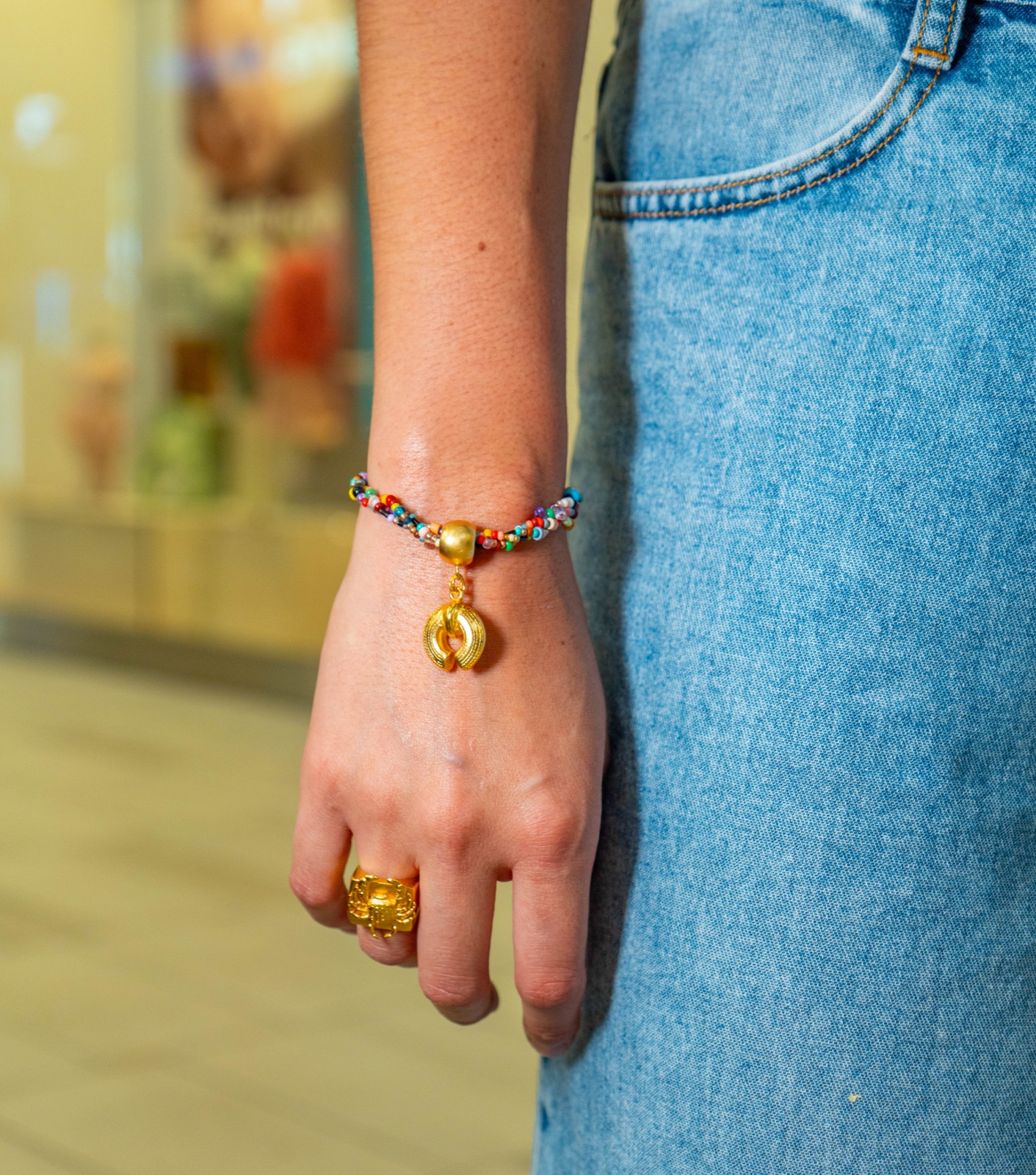
The nose ring was an ornament worn by Tairona chiefs. More than jewelry, it was a sign of status and authority: it showed who governed.
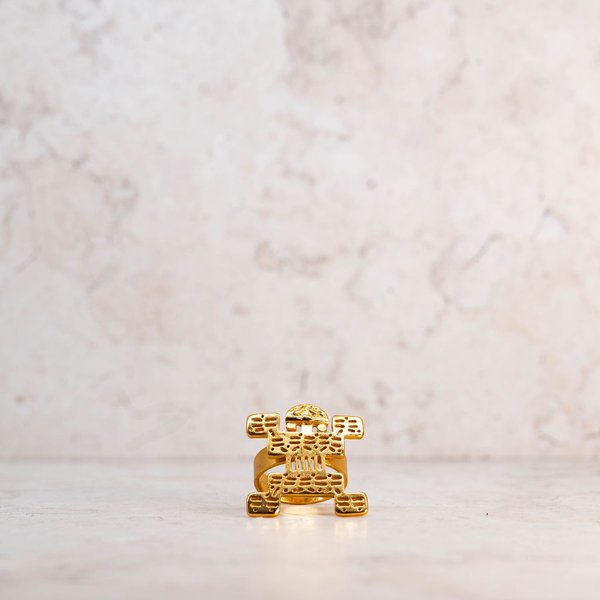
The tunjo
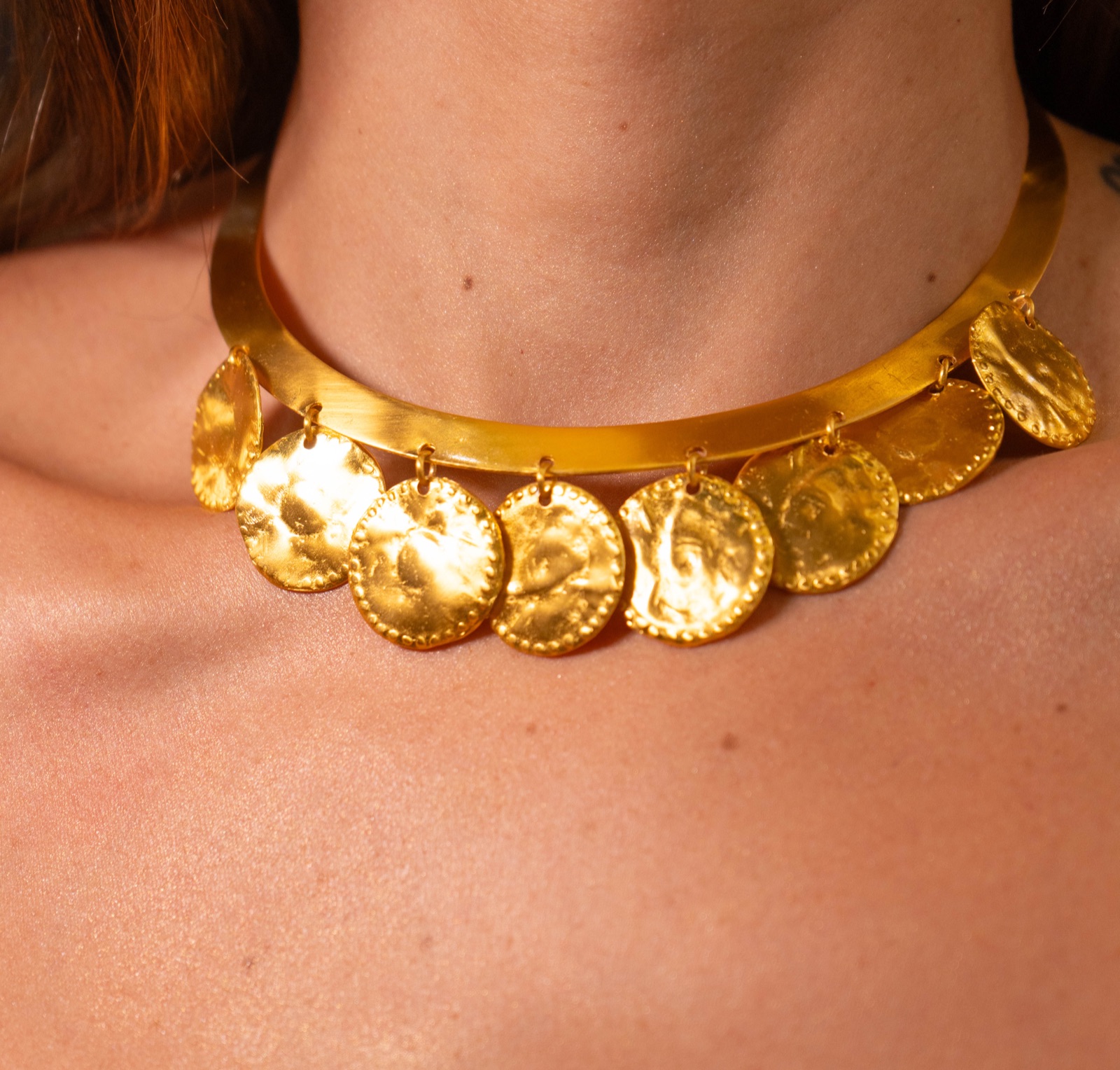
The tunjo was a votive figure, human or animal, offered to the forces of nature. It was not worn as adornment: it was given as an offering.
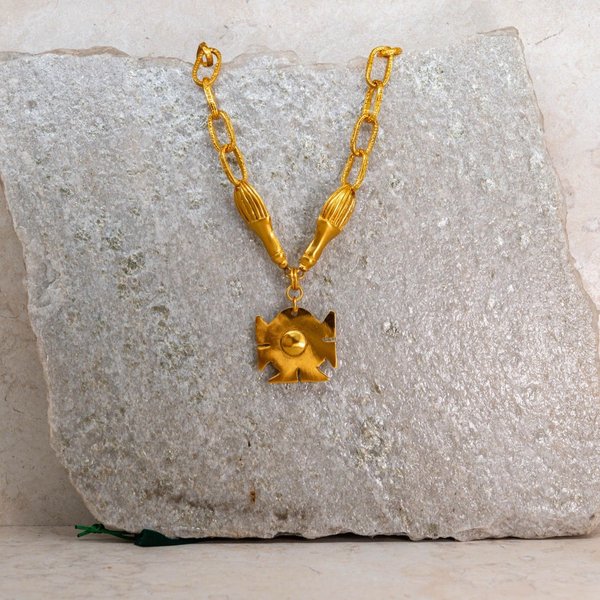
The poporo
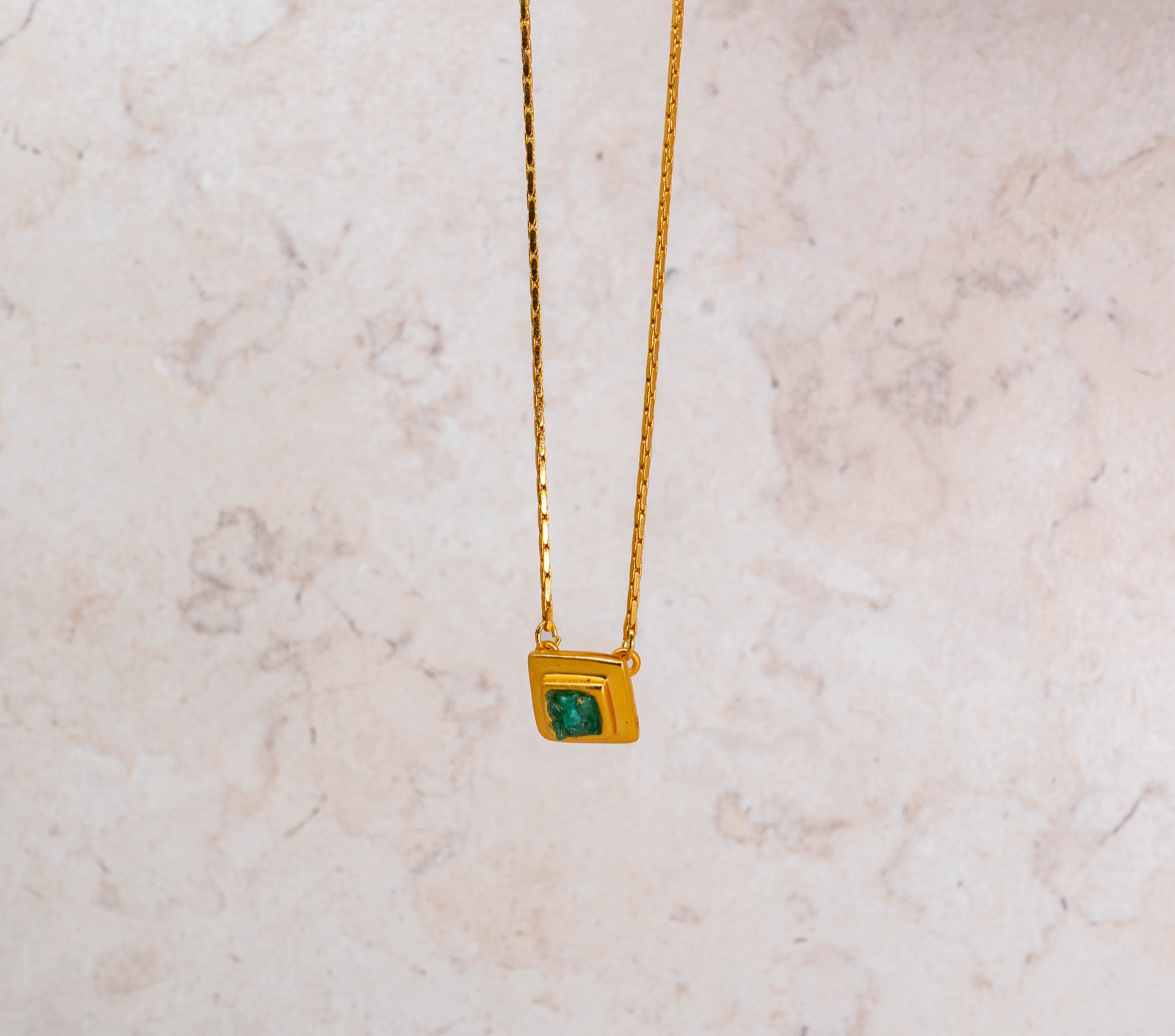
The Quimbaya poporo held the lime chewed with coca leaves in ceremonies of wisdom. It symbolized knowledge, maturity and the authority of the chief.
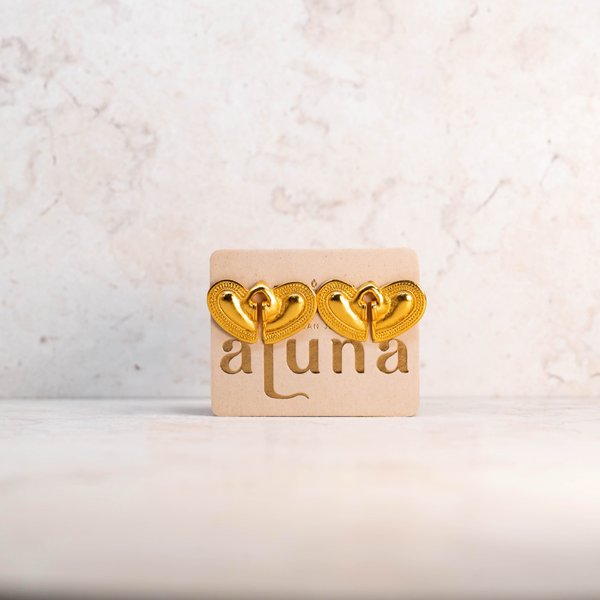
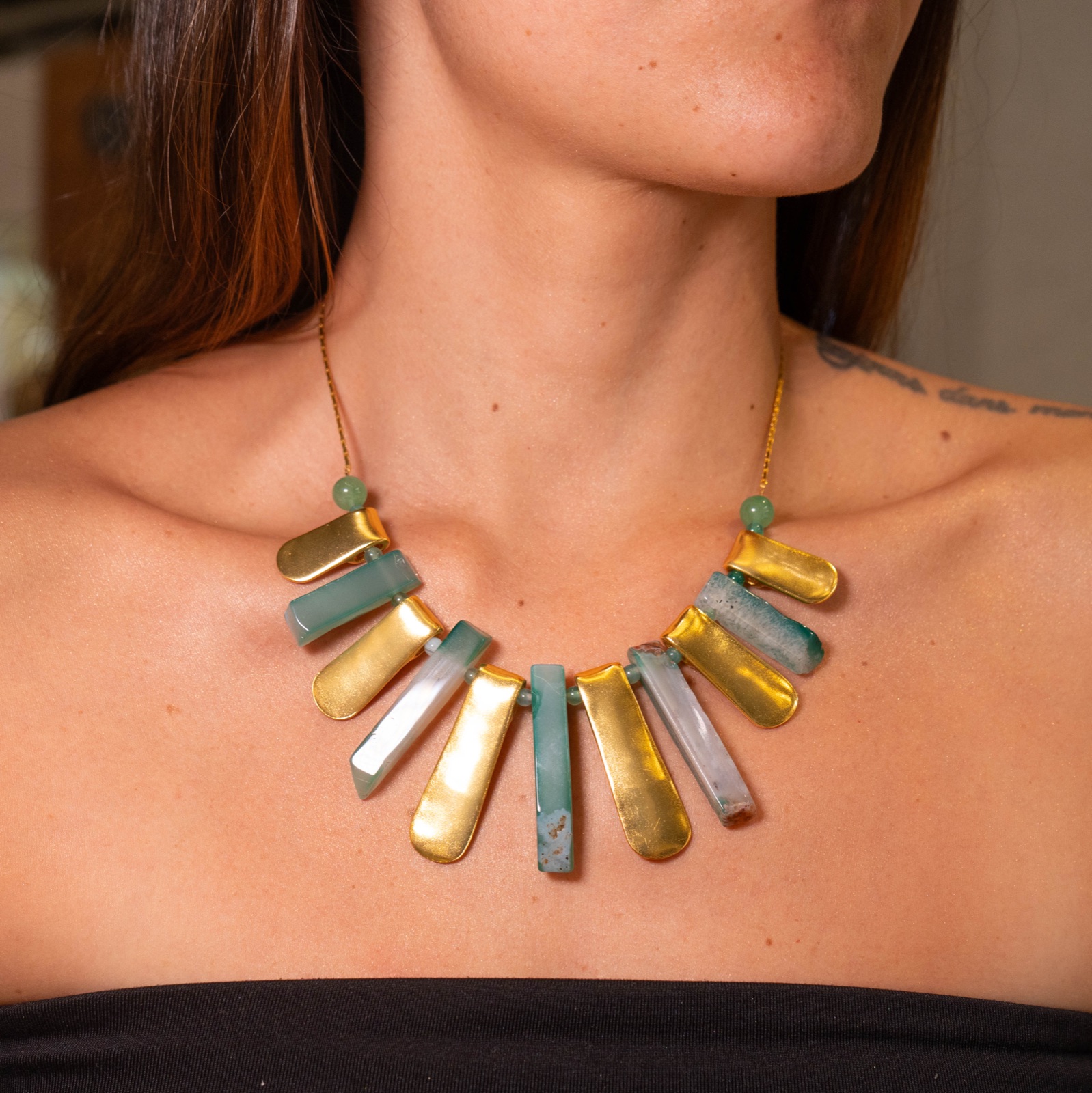
The pectoral
Pectorals covered the chest of leaders and were a symbol of power and protection. The more elaborate they were, the higher the rank of the wearer.
Nature and craft
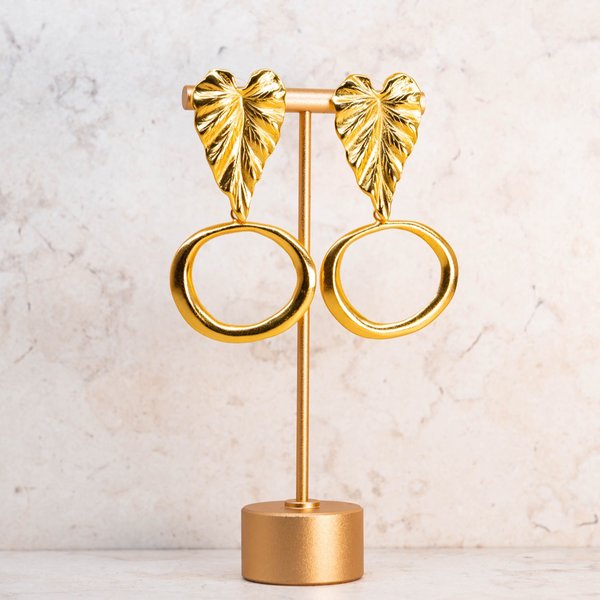
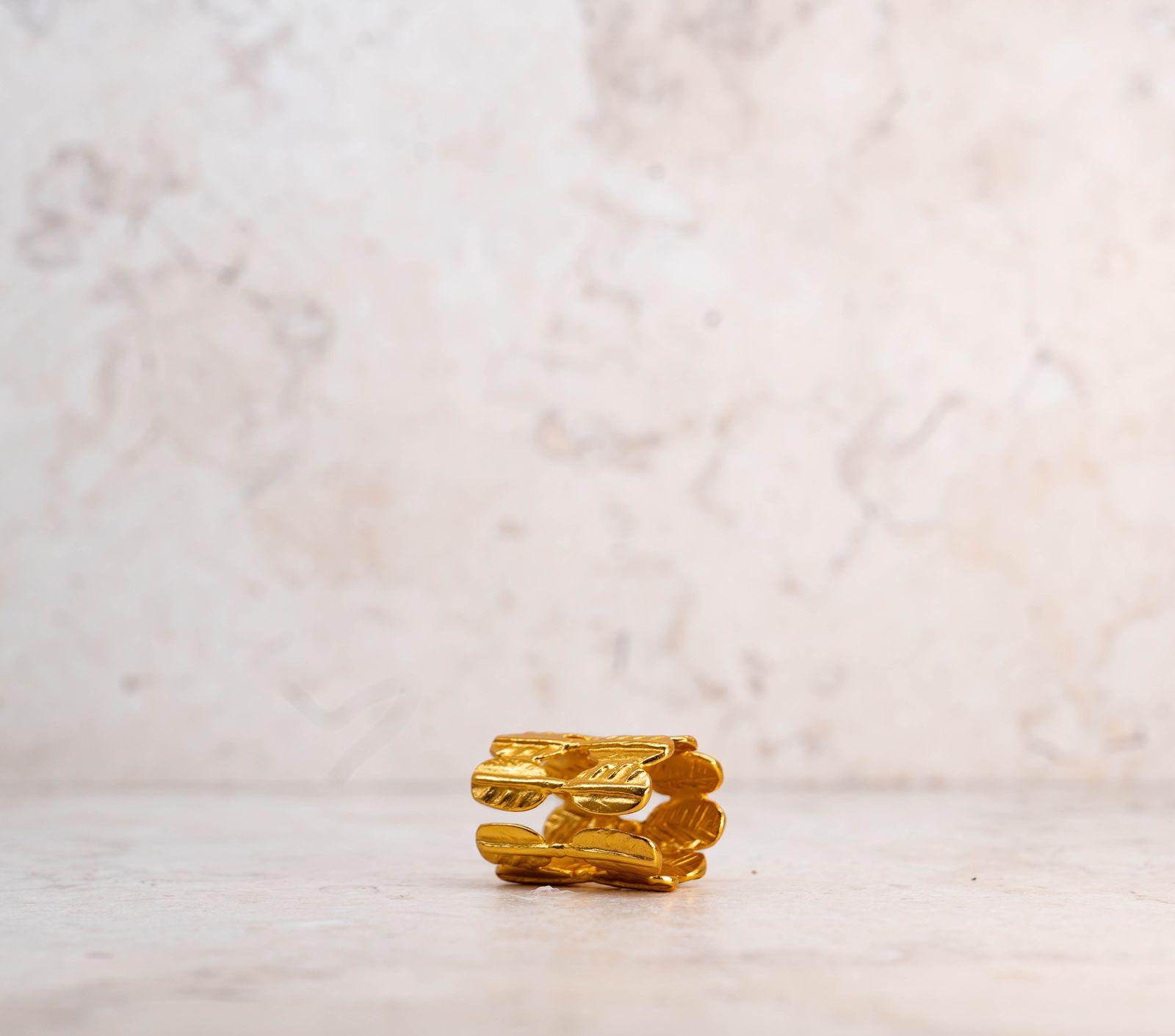
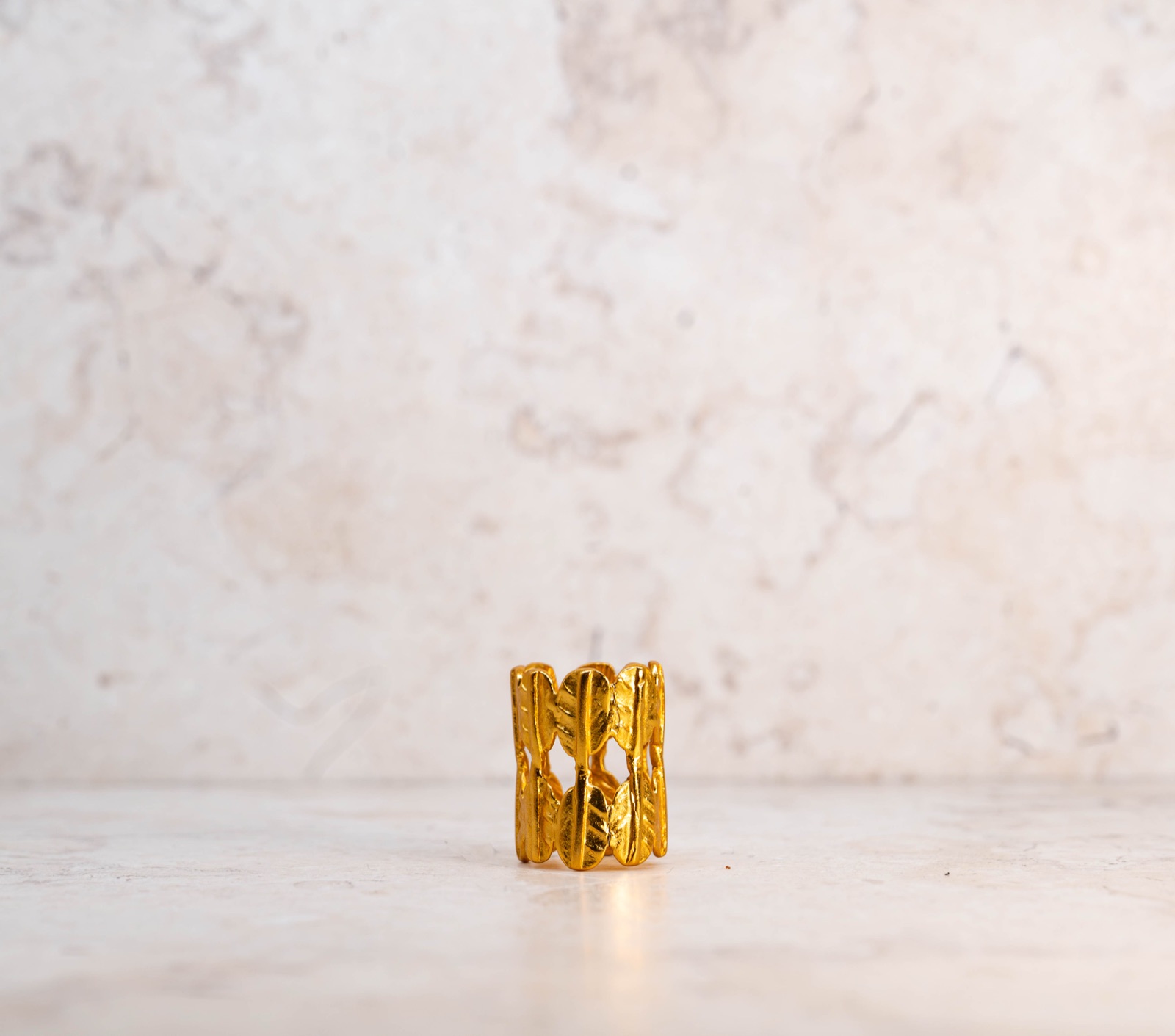
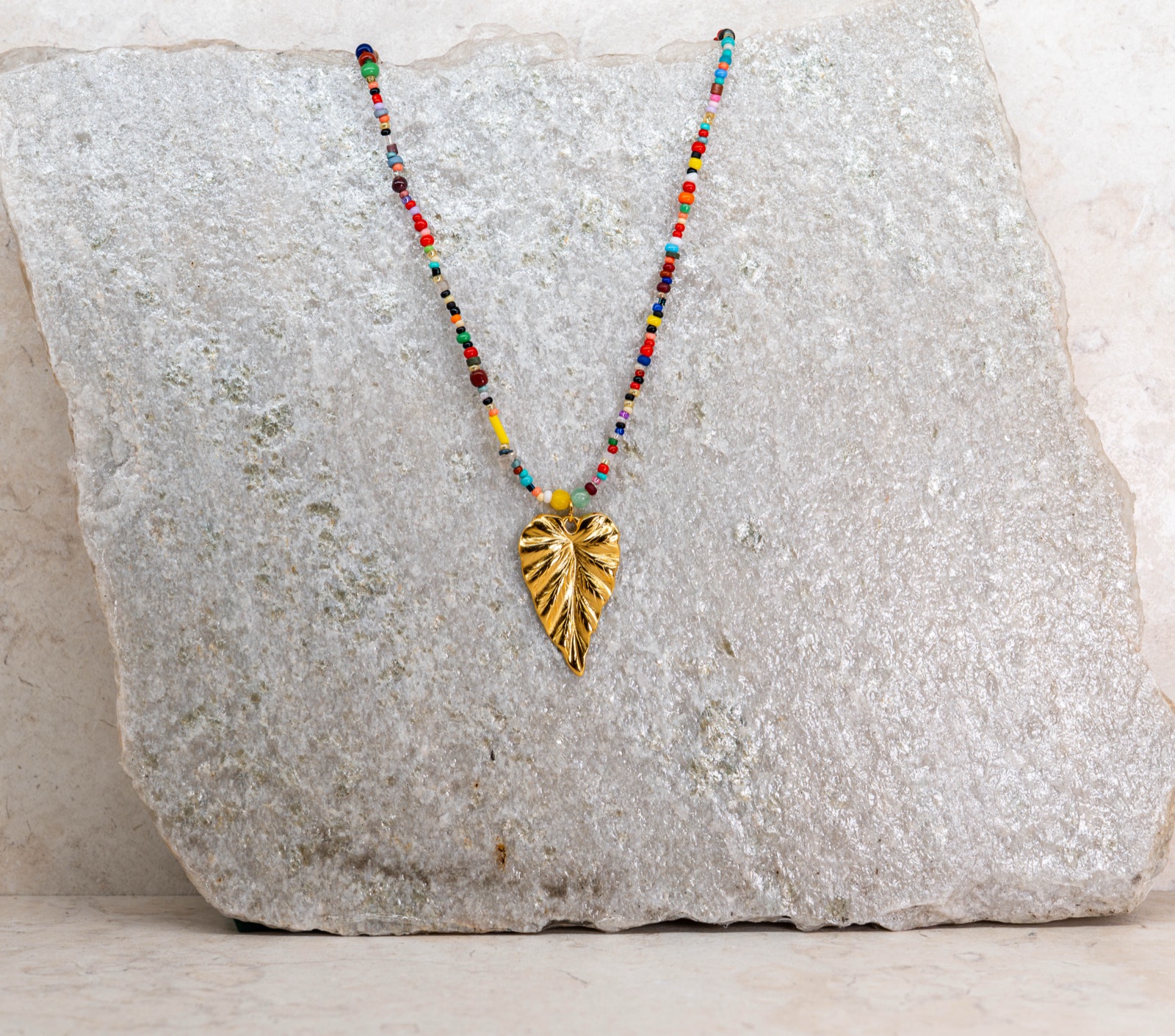
The leaf and the flower
The leaf and the flower spoke of the nature that sustains life, of abundance and of the constant renewal of the plant world.
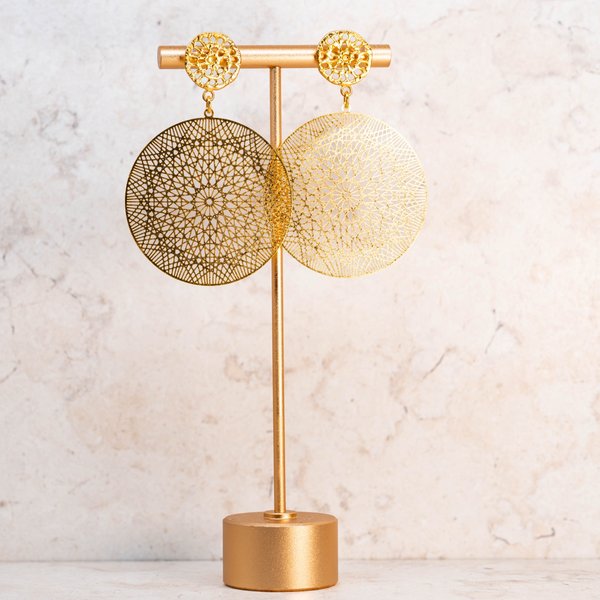
Filigree
Filigree is not an animal or a star: it is a technique. It was born with the Zenú, who wove gold threads like lace. Today it remains a symbol of patience, precision and a mastery that never repeats itself.
Every Aluna symbol comes with its story, because we believe jewelry is chosen for what it means. Explore the catalog and find the piece that speaks about you.